 How-to
Can You File a Roof Damage Claim Without Visible Leaks?
Last Updated: November 12, 2026
Quick Summary
You can file a roof damage claim without visible leaks, but the burden of proof is heavier because insurers pay for sudden storm damage, not gradual wear. Document hidden entry points like failed flashing, attic staining, and dented vents, then support the claim with a professional inspection report tied to a specific storm date.
- A covered peril is a sudden event like hail or wind; maintenance problems like worn shingles are not covered.
- Inspect from the ground and attic with photos, but never climb onto the roof yourself.
- Storm damage usually shows a pattern across slopes, while one isolated stain often signals maintenance.
- If an adjuster reports no damage, request their written report and photos, then submit a written rebuttal.
- Do not repair or replace the roof before a dispute is resolved; make only temporary repairs and keep receipts.
Table of Contents
- Why Insurers Treat Hidden Roof Damage Differently Than an Active Leak
- The Roof Insurance Claim Process When Nothing Is Dripping
- How Long Do I Have to File a Claim for Roof Damage?
- How to Get Insurance to Pay for Roof Replacement
- What to Do When an Adjuster Reports No Damage
- Filing a Roof Damage Claim Denial Appeal That Holds Up
- Schedule a Free Hidden Damage Inspection
- Frequently Asked Questions
Why Insurers Treat Hidden Roof Damage Differently Than an Active Leak
A roof damage claim without visible leaks is one of the hardest claims to win, and most homeowners learn that the hard way.
Here is the core tension. Insurers pay for sudden, accidental damage from a covered peril. They do not pay for a roof that simply wore out.
That distinction decides most claims. So before you call anyone, understand which side of the line your roof sits on.
What Counts as a Covered Peril vs. a Maintenance Problem
A covered peril is a specific, sudden event your policy lists as covered, such as hail, wind, or a fallen limb. A maintenance problem is gradual deterioration the homeowner is expected to manage.
The difference matters because it sets who pays. Typical covered perils include:
- Hail bruising or cracking shingles
- Wind lifting or tearing shingles
- Falling debris puncturing the deck
Typical maintenance problems include:
- Worn, curling, or granule-bare shingles from age
- Cracked or dried-out flashing sealant
- Clogged gutters backing water under the edge
The Insurance Information Institute's guide to homeowners insurance explains that policies generally cover sudden damage but exclude deterioration and poor maintenance. If your roof is simply old, no claim will change that.
How a Roof Can Leak Without Visible Shingle Damage
Water rarely enters where you can see it. It enters at the weak points and travels.
Common hidden entry points include failed flashing around chimneys and vents, cracked pipe boots, worn underlayment beneath intact shingles, and ice or wind-driven rain forced under an edge.
That is why a roof damage claim built only on "my shingles look okay" falls apart.
The distinction between a covered peril and a maintenance problem decides most hidden-damage claims, so here is how the two break down.
| Category | Examples | Who pays |
|---|---|---|
| Covered peril | Hail bruising or cracking shingles | Insurer, as sudden accidental damage |
| Covered peril | Wind lifting or tearing shingles | Insurer, as sudden accidental damage |
| Covered peril | Falling debris puncturing the deck | Insurer, as sudden accidental damage |
| Covered peril | Sudden water damage from a storm-driven opening | Insurer, as sudden accidental damage |
| Maintenance problem | Worn, curling, or granule-bare shingles from age | Homeowner |
| Maintenance problem | Cracked or dried-out flashing sealant | Homeowner |
| Maintenance problem | Clogged gutters backing water under the edge | Homeowner |
| Maintenance problem | Small leaks ignored until rot spreads | Homeowner |
The Roof Insurance Claim Process When Nothing Is Dripping
The roof insurance claim process for hidden damage follows the same steps as any claim, but the proof burden is heavier. You are documenting what a storm did, not what a leak is doing.
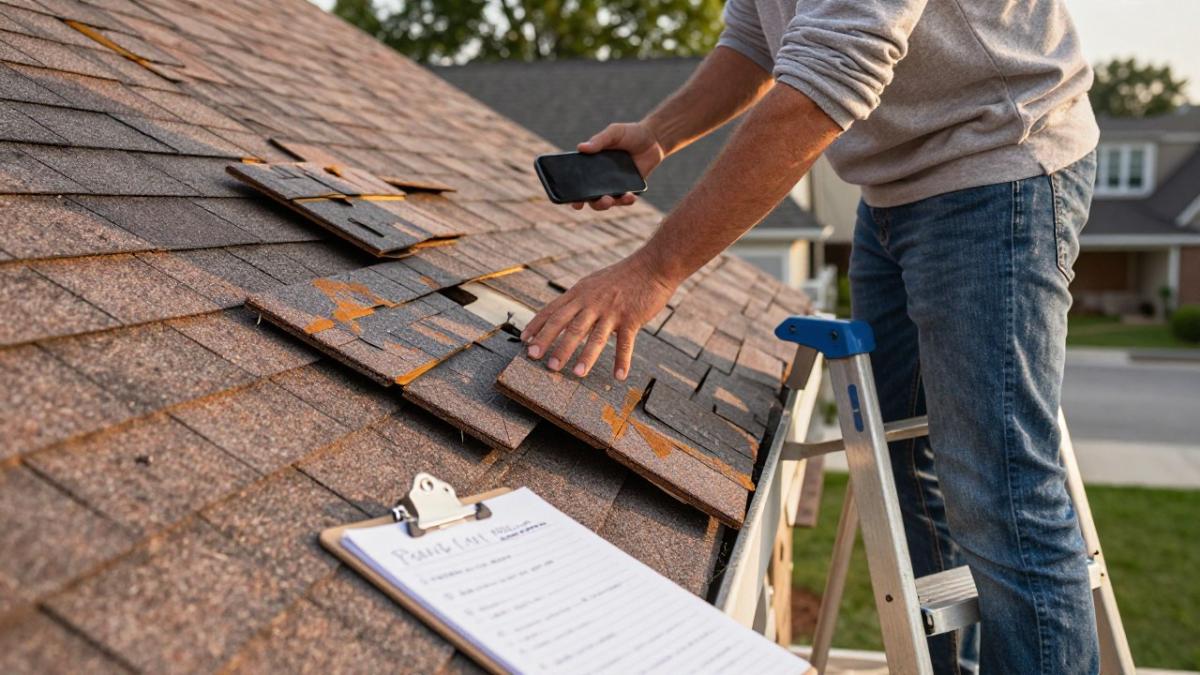
Start with a safe inspection from the ground and inside the attic. Never walk a steep or wet roof yourself. Photograph what you can see, then bring in a professional for the rest.
A Safe Inspection Checklist for Damage You Cannot See From the Ground
Most hidden roof damage is found from three vantage points: the ground, the attic, and the penetrations. Work through them in that order and stop at any point where reaching the area would require climbing on the roof.
From the ground (binoculars help):
- Scan each slope for lifted, missing, or displaced shingles, especially on the side the storm came from
- Look for granule piles at the base of downspouts, which can signal shingle wear or hail impact
- Check gutters and downspouts for dents, separation, or granules washing out
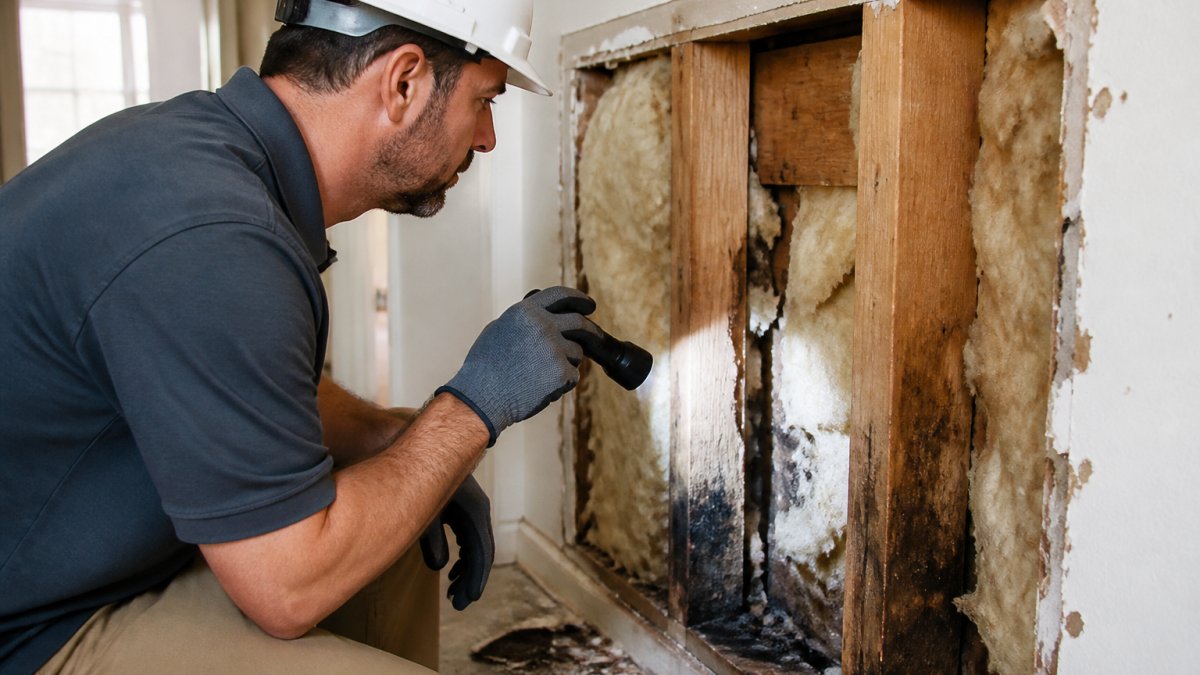
From the attic (a flashlight and phone camera are enough):
- Look for water staining or dark rings on the underside of the roof deck
- Check for damp or compressed insulation, which can signal a slow intrusion above
- Look for daylight through the deck boards or around penetrations
At the penetrations (from a ladder only if stable and on level ground):
- Inspect flashing around chimneys, skylights, and vent pipes for lifted edges or cracked sealant
- Check pipe boots for cracked rubber collars
- Photograph any gap, lift, or crack with a close-up and a wider context shot
Watch out: do not climb onto the roof to inspect it yourself.
Evidence to Collect Before and After a Professional Inspection
Gather this before you file, and add to it after the inspection:
- Date-stamped photos of the roof from the ground and any attic staining
- Close-ups of lifted, cracked, or granule-bare shingles
- Photos of dented gutters, vents, or downspouts
Keep a simple log of every call and email with your insurer. Documentation wins disputes.
How to Tell a Covered Sudden Event From Pre-Existing or Gradual Damage
Coverage turns on cause, not on whether water is currently dripping. A useful way to sort your own situation is to ask three questions in order:
- Is there a specific date and event? If you can point to a hailstorm, wind event, or fallen limb, you have a candidate covered peril. If the damage appeared gradually with no event, it is more likely maintenance or wear.
- Is the damage pattern consistent with that event? Hail typically leaves impact marks on shingles, vents, and gutters on the storm-facing slope. Wind typically lifts or tears shingles at edges and ridges. Gradual wear shows as curling, granule loss across the whole roof, or cracked sealant at flashing.
- Does the damage cross multiple areas? Storm damage usually shows a pattern across slopes or penetrations. A single isolated stain with no matching exterior evidence is more often a maintenance issue.
Claims built on a clear event date, a consistent damage pattern, and a professional report generally have a stronger basis than claims built on "the roof looks bad." If your answers point to gradual wear, a claim is unlikely to succeed no matter how the damage is documented.
How Long Do I Have to File a Claim for Roof Damage?
Most policies require you to report a claim promptly, and the applicable deadline depends on your policy language (How to file a homeowners claim). Check your policy language and confirm the rules with your state insurance department rather than assuming.
The practical deadline is shorter than the legal one. The longer you wait, the harder it is to tie damage to a specific storm. File as soon as you have reasonable evidence.
How to Get Insurance to Pay for Roof Replacement
Full replacement is generally considered when the damage is storm-caused, widespread, and documented, not when the roof is merely old. To support that case:
- Get a professional inspection that ties damage to a specific storm date
- Show damage across multiple slopes, not one isolated spot
- Document matching shingles so a partial repair is impractical
Thorough documentation gives the adjuster a clearer basis for evaluating the claim.
What to Do When an Adjuster Reports No Damage
An adjuster's "no damage" finding is a decision, not a final verdict. You can respond, and the response works best when it is procedural rather than emotional. The goal is to close the gap between what the adjuster saw and what your evidence shows.
Step 1: Request the Adjuster's Written Report and Photos
Ask your insurer in writing for the adjuster's report, the photos taken during the inspection, and any measurements or test squares used. You are entitled to the basis of the decision, and the report often reveals where the inspection fell short, such as a ground-only inspection, a missed attic, or a test square on only one slope. Compare the report to your own photos and note every discrepancy in writing.
Step 2: Get an Independent Professional Assessment
Bring in a qualified roofer or licensed inspector who will put findings in writing with photos, measurements, and a cause opinion tied to a specific storm date. Ask the inspector to address the adjuster's specific findings, not just to restate that damage exists. A report that answers the insurer's stated reason is far more persuasive than a second opinion that ignores it.
Step 3: Submit a Written Rebuttal With Your Evidence
Send a short, organized rebuttal that does three things: states the adjuster's finding, states what your evidence shows, and attaches the supporting photos, weather records, and inspection report. Keep it factual and reference the policy language you believe applies. Send it by a method you can track and keep copies of everything.
Step 4: Use the Policy's Dispute Process
Review your policy for the insurer's internal review or appraisal process. Many policies include an appraisal clause that lets both sides hire their own appraisers when they disagree on the amount of loss, and some include a separate review step before a formal denial. Follow those steps in the order the policy sets out.
Step 5: Escalate to Your State Insurance Department
If the internal process stalls, your state insurance department can explain your options and, in many states, accept a complaint about how the claim was handled.
Watch out: do not repair or replace the roof before the dispute is resolved.
A written professional report and a response that addresses the insurer's stated reason can help when an initial adjuster finding is disputed.
Filing a Roof Damage Claim Denial Appeal That Holds Up
A roof damage claim denial appeal works when it answers the insurer's specific reason for denial with evidence, not frustration. Read the denial letter closely. It usually cites a cause: wear and tear, no covered peril, or late filing.
Build your appeal around that reason:
- If they cite wear and tear: submit inspection evidence of sudden, storm-linked damage.
- If they cite no covered peril: provide weather records for the storm date.
- If they cite late filing: show when you first discovered the issue and why.
Send the appeal in writing, keep copies, and follow your policy's dispute steps. If the appeal stalls, your state insurance department can explain your options.
Schedule a Free Hidden Damage Inspection
Hidden roof damage rarely announces itself. By the time water stains appear on a ceiling, the problem has usually been working for months.
That is where we come in. A-Group Capital Roofing provides roof inspections, damage documentation, and help understanding the insurance restoration process.
If you suspect storm damage but see no leak, do not wait for one.
Storm damage does not always drip.
Frequently Asked Questions
Can you file a roof damage claim if there are no visible leaks?
Yes. A roof damage claim does not require an active leak. Most homeowners policies respond to a covered peril such as hail or wind, and the damage itself is the trigger, not water inside the house. Document what you can see from the ground, note the storm date, and get a professional inspection report that records granule loss, lifted or creased shingles, and damaged flashing. Insurers may still deny the claim, but a lack of dripping water is not a valid reason on its own.
How long do I have to file a claim for roof damage?
Deadlines vary by policy and state. Many policies require prompt notice, often within a set number of days after the damage occurs, while state statutes of limitation can run from one to several years. The practical rule is to report the damage as soon as you notice it. Waiting months can give an insurer grounds to dispute whether the damage is storm-related or simply wear and tear, which weakens your position even if you are technically inside the filing window.
What evidence should I gather before filing a roof damage claim?
Collect dated photographs from the ground showing missing granules, dented metal vents, lifted shingles, and damaged gutters. Save the weather report or storm date for your area, any receipts for temporary repairs, and a written professional inspection report. Keep a log of who you spoke with at the insurer and when. This documentation supports the roof insurance claim process and gives you a record to reference if the adjuster's findings conflict with your inspector's.
What should I do if my insurer says there is no roof damage?
Ask for the adjuster's written report and the specific reason for the denial. Then get an independent inspection that documents the damage with photographs and measurements, and submit it with a roof damage claim denial appeal. Review your policy exclusions so you can address them directly, and keep the appeal factual rather than emotional. If the dispute continues, ask about the appraisal clause in your policy or contact your state insurance department for guidance on next steps.