 How-to
Emergency Roof Repair for Commercial Buildings: A Response Plan
Last Updated: November 19, 2026
Quick Summary
Emergency roof repair is any roof failure that threatens people, causes active water intrusion, or risks shutting down business operations. Stop the water first, but check for electrical hazards and evacuate unsafe areas before containment begins. Keep everyone off the roof during wind, lightning, or heavy rain.
- Run a two-minute triage check before anyone touches a bucket or moves equipment.
- Shut off power to wet ceiling areas at the breaker before anyone works below.
- An unsecured tarp that blows off can damage HVAC units or injure someone below.
- Flat roofs fail at seams, not the field, so identify the membrane before authorizing a temporary fix.
- A 24-hour call should produce a crew, not a voicemail, from intake to final documentation.
Table of Contents
- What Qualifies as a Commercial Roofing Emergency
- Emergency Commercial Roof Leak Repair: First Steps for an Active Leak
- Commercial Flat Roof Repair: Why Flat Roofs Fail Differently
- Emergency Roof Repair for Commercial Buildings Cost: What Drives the Bill
- 24 Hour Emergency Roof Repair for Commercial Buildings: What to Expect
- Insurance Documentation Workflow for Storm and Wind Damage
- When to Call a Commercial Roofing Contractor
- Frequently Asked Questions
What Qualifies as a Commercial Roofing Emergency
Water coming through a ceiling tile at 2 a.m. is an emergency. A missing shingle is not.
An emergency roof repair is any roof failure that threatens people, causes active water intrusion, or risks shutting down business operations. Three tests help sort a real emergency from a routine repair:
- Is water entering the building right now? An active leak qualifies.
- Is there a safety hazard? Sagging deck, loose flashing, or fallen debris over walkways counts.
- Is critical equipment or inventory exposed? Server rooms, medical spaces, and stock storage raise the stakes.
A commercial roofing emergency differs from a residential one in scale. A single leak over a retail floor can close a store for a day. Water over electrical panels creates a genuine shock risk.
If your situation involves a tree through the deck, our guide on how to handle roof repair for fallen tree damage walks through that specific scenario step by step.
Emergency Commercial Roof Leak Repair: First Steps for an Active Leak
Stop the water before you chase the source. That order saves more inventory than any other decision you make in the first hour. But stopping water is the second job.
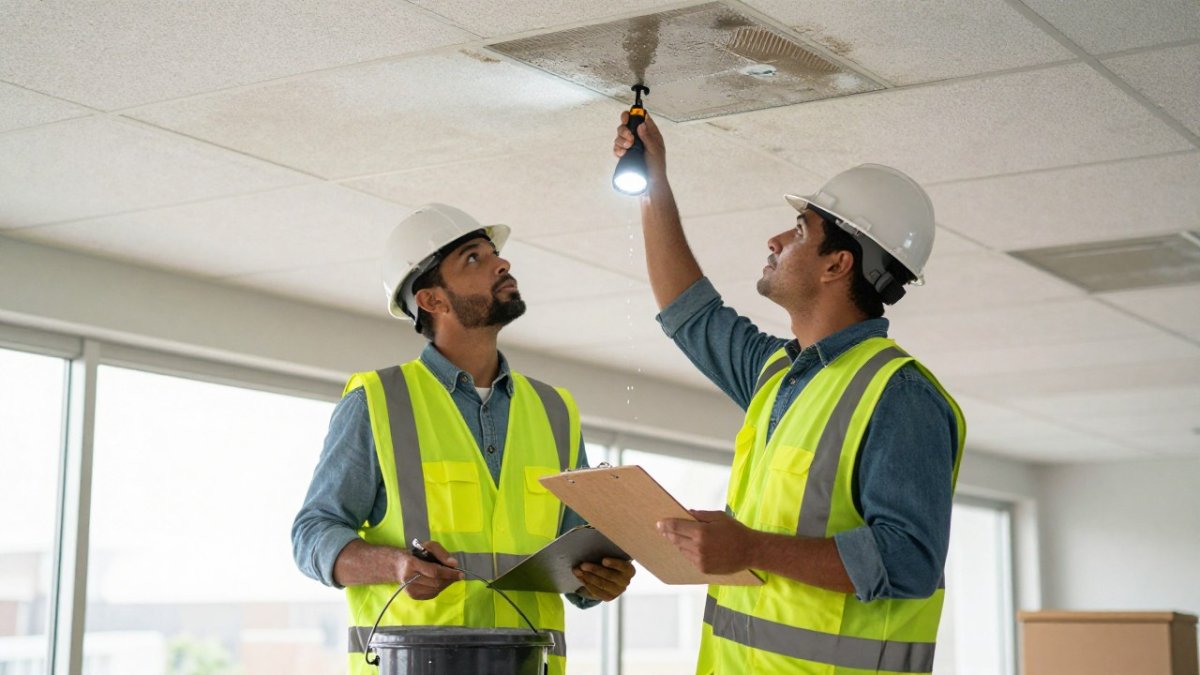
Triage First: Contain, Escalate, or Evacuate
Before anyone touches a bucket, run this ordered check. It takes about two minutes and it prevents the most common emergency-room outcomes.
- Is anyone in immediate danger? Water pooling near electrical panels, a sagging ceiling, or a ceiling that has already partially collapsed means evacuate the affected area and call for professional assessment. Do not send staff in to move equipment under a sagging deck.
- Is water contacting electrical equipment? If water is reaching panels, conduits, or ceiling-mounted fixtures, shut off power to that zone at the breaker before anyone works below. If you cannot safely reach the breaker, treat the area as energized and keep everyone out.
- Is the leak containable? A single active drip over a finished floor is containable. Water spreading across a wide ceiling area, running down walls, or pooling on a structural deck is not. Containable leaks get containment; non-containable leaks get escalation.
- Is the roof safe to access? During active wind, lightning, or heavy rain, no one goes on the roof. Period. Interior containment continues until conditions settle.
A common pattern is a facility manager who moves straight to buckets and inventory and skips the electrical check. Water plus a live panel is the one scenario in this list that can injure or kill someone in the first five minutes.
Protecting People, Equipment, and Inventory
Once triage is complete, move people out of the affected area first. Then cover what cannot move. Electronics, paper records, and finished goods take priority over furniture.
- Shut off power to wet ceiling areas at the breaker before anyone works below.
- Place buckets and containment sheeting under active drips, and route sheeting so water does not migrate under equipment or into wall cavities.
- Move inventory at least a few feet clear of the leak zone, and elevate stock off the floor where water is spreading.
- Photograph everything before you move it. Those photos become insurance evidence.
- Keep a written timeline: when the leak was discovered, when power was shut off, when containment started, and who was notified.
A common mistake is sending staff up on a wet roof during a storm. Wind gusts and slick membrane cause falls every year. Keep everyone off the roof until conditions settle.
Temporary Protection and Roof Tarping
Temporary protection buys you time. A properly secured tarp or patch diverts water until a permanent repair can be made.
Tarping a commercial roof is not the same as tarping a house. Flat roofs pond water, so a tarp needs secure anchoring to shed it. Loose edges can flap in wind and tear free.
Watch out: an unsecured tarp that blows off can damage HVAC units or injure someone below, turning a repair into a liability claim.
When to Escalate to a Professional Immediately
Call a commercial roofing contractor the moment any of these are true: water is reaching electrical equipment, the deck is sagging or deflecting, the leak is spreading faster than containment can keep up, storm damage covers a large roof area, or the building has tenants or occupants who cannot be relocated safely. For a live emergency, our guide on emergency roof repair services and what to do right now gives you the immediate playbook.
Commercial Flat Roof Repair: Why Flat Roofs Fail Differently
Flat roofs fail at the seams, not the field. That single fact explains most commercial roof leaks, but it is only the start.
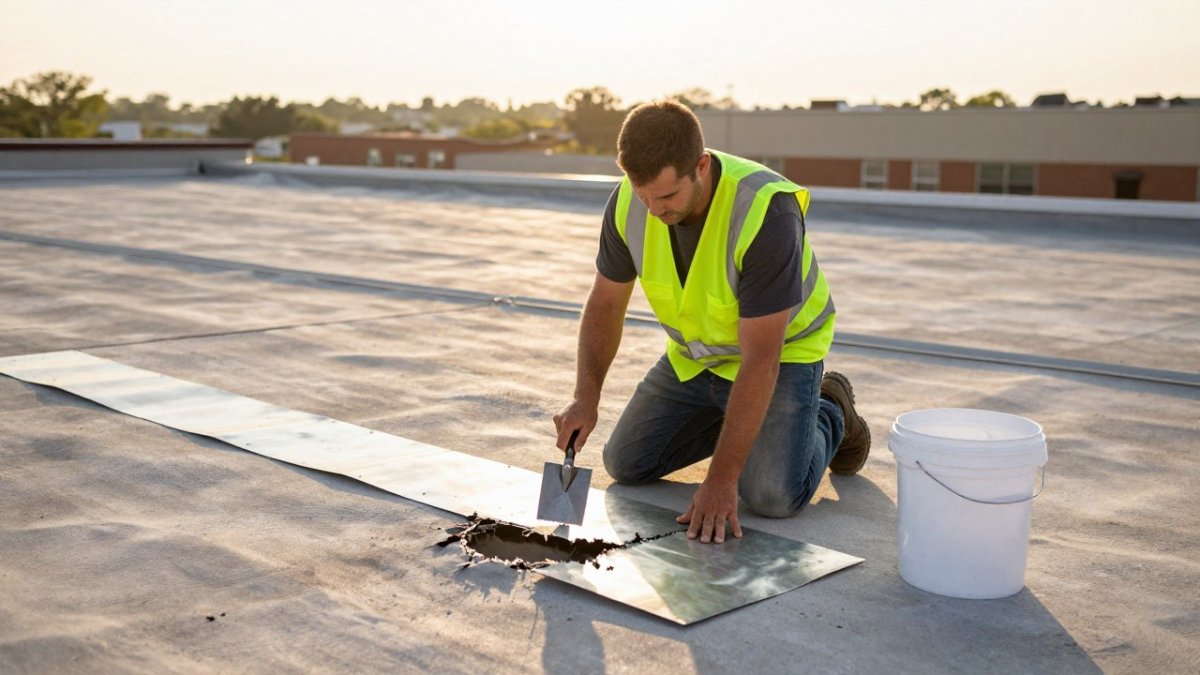
Membrane systems, whether TPO, EPDM, or modified bitumen, rely on seams and flashing to stay watertight. Those joints take the stress from thermal expansion, foot traffic, and ponding water. Over time, seams separate and water finds the gap.
Ponding water is the quiet killer. Standing water after a rain adds weight and works its way into any weak point.
How Emergency Response Differs by Roof System
TPO and PVC (thermoplastic). These membranes are heat-welded at seams. In an emergency, a failed weld or a puncture is the usual culprit.
Modified bitumen. These roofs are torch-applied or self-adhered and fail at laps, blisters, and flashing details. A blister that has opened is an active leak path.
Built-up roofing (BUR). BUR fails at flashing, drains, and penetrations more than in the field.
Metal. Metal roofs fail at fasteners, seams, and penetrations, and wind can lift panels at the eaves and ridges.
What This Means in the First Hour
Identify the roof system before you authorize a temporary fix. If you do not know it, ask the contractor to confirm it during the emergency inspection. A temporary patch that is wrong for the membrane can void a warranty or make the permanent repair more expensive.
Metal roofs fail differently again, usually at fasteners and penetrations. That is why a contractor who works mostly on shingle roofs may misdiagnose a flat roof leak. Ask specifically about membrane experience, and ask which systems the crew works on most often.
Emergency Roof Repair for Commercial Buildings Cost: What Drives the Bill
Pricing depends on scope, access, and timing, not a flat rate. A firm number is best confirmed after the roof has been seen.
Emergency roof repair for commercial buildings cost is driven by five factors:
| Cost Driver | What It Covers | Why It Moves the Price |
|---|---|---|
| Timing | After-hours, weekend, holiday response | Crews mobilized outside normal hours cost more |
| Access | Roof height, equipment, interior access | Difficult access adds labor and equipment |
| Damage extent | Isolated leak vs. widespread failure | Larger area means more material and time |
| Roof system | TPO, EPDM, metal, modified bitumen | Material and skill requirements vary |
| Temporary vs. permanent | Tarp now, repair later | Two mobilizations instead of one |
A single leak over an office ceiling is a small job. A failed seam across a warehouse roof is not. Free same-day estimates are available so the number reflects the actual roof. Contact A-Group Capital Roofing at (682) 219-9933 or visit the website for current pricing or a quote.
24 Hour Emergency Roof Repair for Commercial Buildings: What to Expect
A 24 hour emergency roof repair for commercial buildings call should produce a crew, not a voicemail. Here is what a real response looks like from the first call to the final walkthrough.
- Call intake. You describe the leak, the building type, and the access. Expect real questions, not a script.
- Rapid response. A crew arrives to stop the water and assess damage.
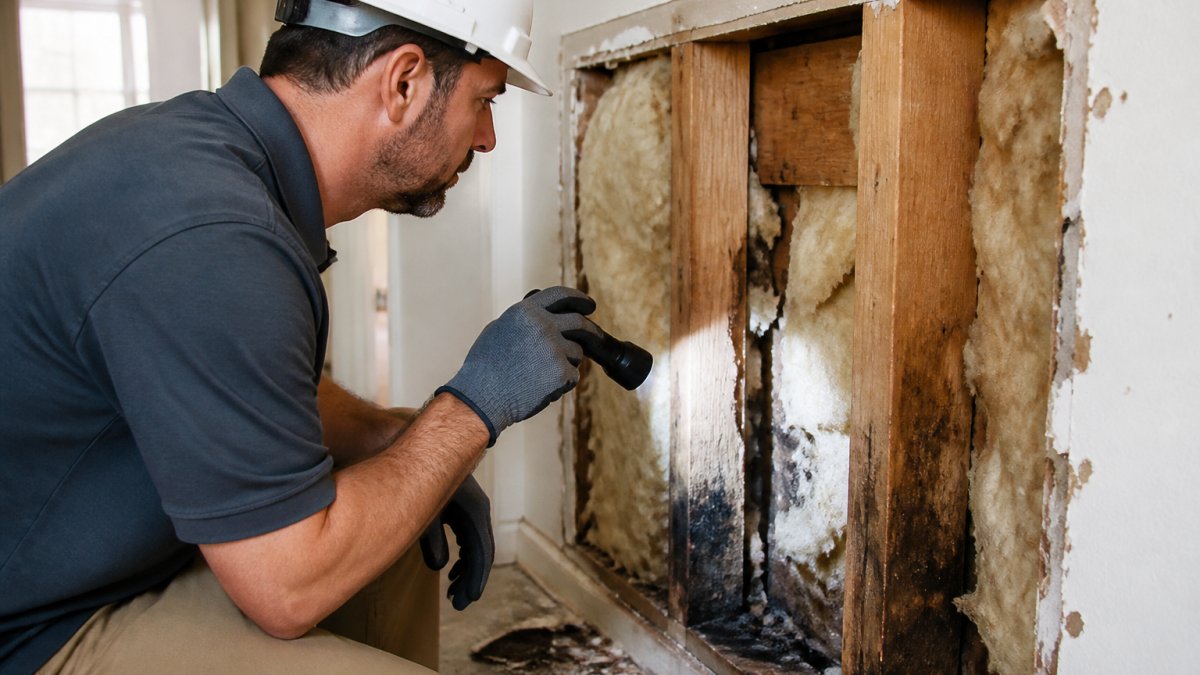
- Damage assessment. The contractor documents the source, the extent, and the cause.
- Stabilization. Tarping or temporary repair protects the building until permanent work begins.
- Repair plan and estimate. You get scope, timeline, and cost in writing.
- Permanent repair. Crews complete the fix and verify no water remains trapped.
- Final documentation. Photos, invoices, and warranty paperwork for your records and your insurer.
Our team provides free same-day estimates and helps with the insurance claim process.
Insurance Documentation Workflow for Storm and Wind Damage
Insurers generally rely on documented damage. Building a clear file before contacting the adjuster helps.
Photograph the leak from inside and outside. Capture the damaged ceiling, the wet inventory, and the roof surface at the point of failure. Note the date, time, and weather conditions. Keep every receipt for emergency containment and temporary protection.
Wind and hail damage often hides in plain sight. Bruised shingles, dented metal, and cracked membrane may not leak yet but still qualify as damage. A professional inspection finds what a walkaround misses.
If you are weighing deductible options before filing, our breakdown of roof insurance claim deductible options explains how each choice affects your out-of-pocket cost. And if damage exists without an active leak, our guide on filing a roof damage claim without visible leaks covers whether you can still recover.
When to Call a Commercial Roofing Contractor
Call a contractor when water is entering, when the roof structure looks compromised, or when the damage exceeds what your maintenance staff can safely handle.
For a live emergency, our guide on emergency roof repair services and what to do right now gives you the immediate playbook.
Signs it is time to call:
- Active water intrusion anywhere in the building
- Sagging deck or visible structural deflection
- Storm damage across a large roof area
- A leak that returns after a previous patch
- Insurance adjuster involvement that needs contractor documentation
When evaluating a contractor, ask for photos of the actual damage and a repair-first recommendation where repair will hold.
A roof emergency gets worse by the hour. Water spreads, inventory spoils, and small failures turn into structural problems.
Frequently Asked Questions
How much does emergency roof repair for commercial buildings cost?
Emergency roof repair for commercial buildings cost depends on roof size, access, damage extent, and whether temporary or permanent repairs are needed. After-hours calls and complex flat roof systems typically add to the total. Because every building is different, A-Group Capital Roofing provides a free same-day estimate rather than quoting a flat figure. Get an inspection first so you can compare repair versus replacement and document the damage for your insurance claim.
What should I do first when a commercial roof starts leaking?
Move people and equipment away from the leak, shut off power to affected areas if water is near electrical fixtures, and contain the water with buckets and tarps. Photograph the damage before cleanup. Then call a 24 hour emergency roof repair for commercial buildings provider to tarp the roof and stop further water intrusion. Do not send staff onto the roof during a storm, and avoid walking a saturated flat roof where decking may be compromised.
Does commercial property insurance cover emergency roof repairs?
Most commercial property policies cover emergency repairs that prevent further damage, especially from storm, wind, or hail damage. Keep every receipt, take damage photos before and after temporary protection, and document the date and cause. Insurers expect you to mitigate loss, so tarping and leak containment are usually reimbursable. Review your policy exclusions for wear and tear, and ask your contractor to provide a written damage assessment to support the insurance claim.
Can a commercial roof be temporarily patched during a storm?
Yes, temporary protection such as roof tarping and patch repairs can be installed during active weather when conditions are safe enough for a repair crew. The goal is to stop water intrusion and stabilize the roof until a permanent repair is possible. Temporary fixes are not a substitute for a full damage assessment, so schedule a roof inspection as soon as the storm passes to confirm whether commercial flat roof repair or replacement is the right next step.