 Ultimate guide
Hail Damage Roof Replacement Options: Repair or Replace?
Last Updated: November 10, 2026
Quick Summary
Hail damage roof replacement options range from spot repairs and silicone restoration coatings to partial replacements and full tear-offs. Choose based on roof age, damage extent, and what your insurer will pay for, since insurers cover functional damage but often deny cosmetic claims.
- Spot repair suits isolated hits on young roofs and often falls below your deductible.
- Silicone restoration coatings fit flat or low-slope roofs and add 5-10 years of life.
- Partial replacement works when damage is confined to one slope and materials match.
- Full replacement produces the cleanest insurance outcome for widespread damage or older roofs.
- Impact-resistant shingles and metal roofing may earn insurance premium discounts.
Table of Contents
- Hail Damage Roof Replacement Options at a Glance
- How Hail Damages Roofing Materials and Why It Matters
- Roof Restoration vs Replacement: Which One Fits Your Roof
- How to File a Claim for Hail Damage Roof Coverage
- Hail Resistant Roofing Materials Worth the Upgrade
- Out-of-Pocket Costs, Deductibles, and Supplements
- Schedule a Free Hail Damage Roof Inspection
- Frequently Asked Questions
Hail Damage Roof Replacement Options at a Glance
When a hailstorm rolls through North Texas, the question every homeowner faces is deceptively simple: repair it, restore it, or replace it? Hail damage roof replacement options range from spot repairs and silicone restoration coatings to partial replacements and full tear-offs, and choosing the wrong path can cost you thousands in wasted insurance money or premature failure. This guide breaks down each option so you can make a decision based on evidence, not a contractor's sales pitch.
| Option | Best For | Typical Lifespan Added | Insurance Fit |
|---|---|---|---|
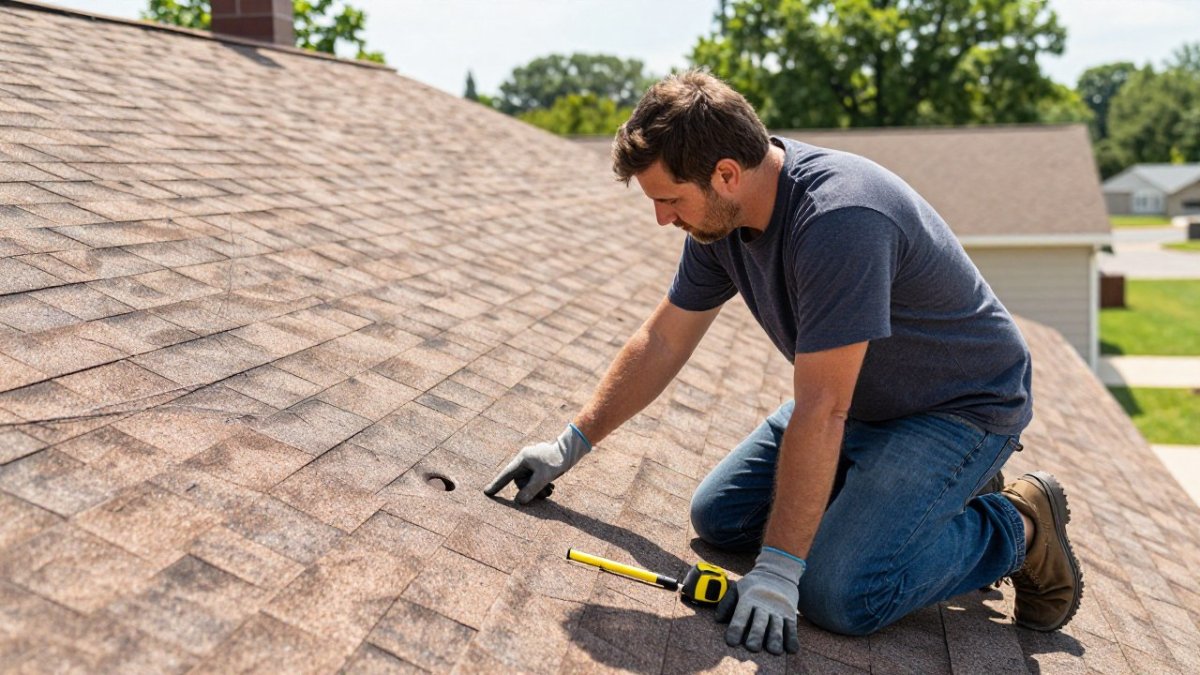
| Spot repair | Isolated hits, young roof | 1-3 years | Often below deductible |
| Silicone restoration coating | Flat or low-slope roofs, tight budgets | 5-10 years | Sometimes approved |
| Partial replacement | Damage confined to one slope | Matches existing roof | Depends on adjuster |
| Full replacement | Widespread damage, roof near end of life | Full new service life | Best claim outcome |
Repair, Restoration, Partial Replacement, or Full Replacement
Each option solves a different problem. Spot repair fixes a handful of bruised shingles. Restoration coats an aging surface to extend its life. Partial replacement swaps out one damaged slope. Full replacement removes everything and starts clean. The right choice depends on roof age, damage extent, and what your insurer will actually pay for.
How Hail Damages Roofing Materials and Why It Matters
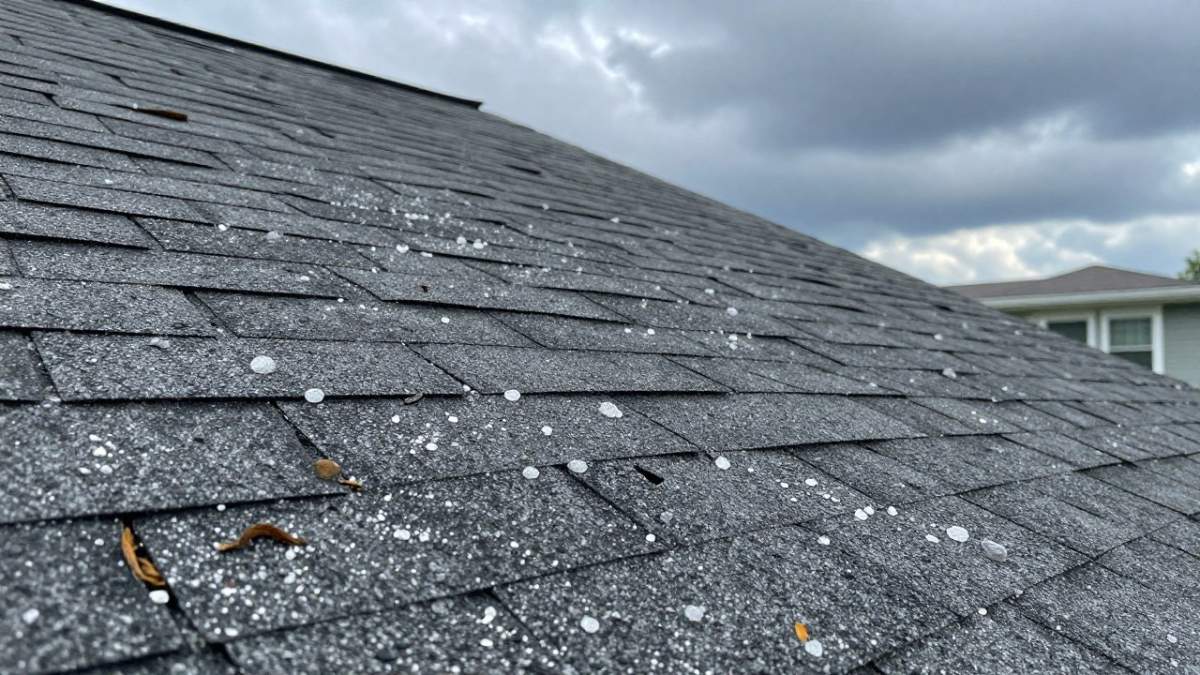
Hail doesn't just dent a roof; it breaks down the material's defenses. On asphalt shingles, impact knocks granules loose and bruises the fiberglass mat beneath, which weakens the shingle and invites leaks. Metal roofing can dent and loosen fasteners.
Functional Damage vs. Cosmetic Damage
This distinction decides most claims. Functional damage reduces the roof's ability to shed water or shortens its expected life. Cosmetic damage changes appearance without affecting performance. Insurers pay for functional damage; they frequently deny cosmetic claims. A bruised shingle with granule loss at the impact point is usually functional. A minor dent on a metal panel may be ruled cosmetic. Document both, but build your claim around function.
Roof Restoration vs Replacement: Which One Fits Your Roof
Restoration and replacement solve different problems, and the right call depends on three variables: the extent of damage, the roof's age relative to its expected service life, and the material's condition beyond the hail hits. A simple decision framework can help prevent the two most expensive mistakes, coating a failing roof or tearing off a roof that had years of life left.
A Practical Decision Framework
Use this four-step test before you commit to any option:
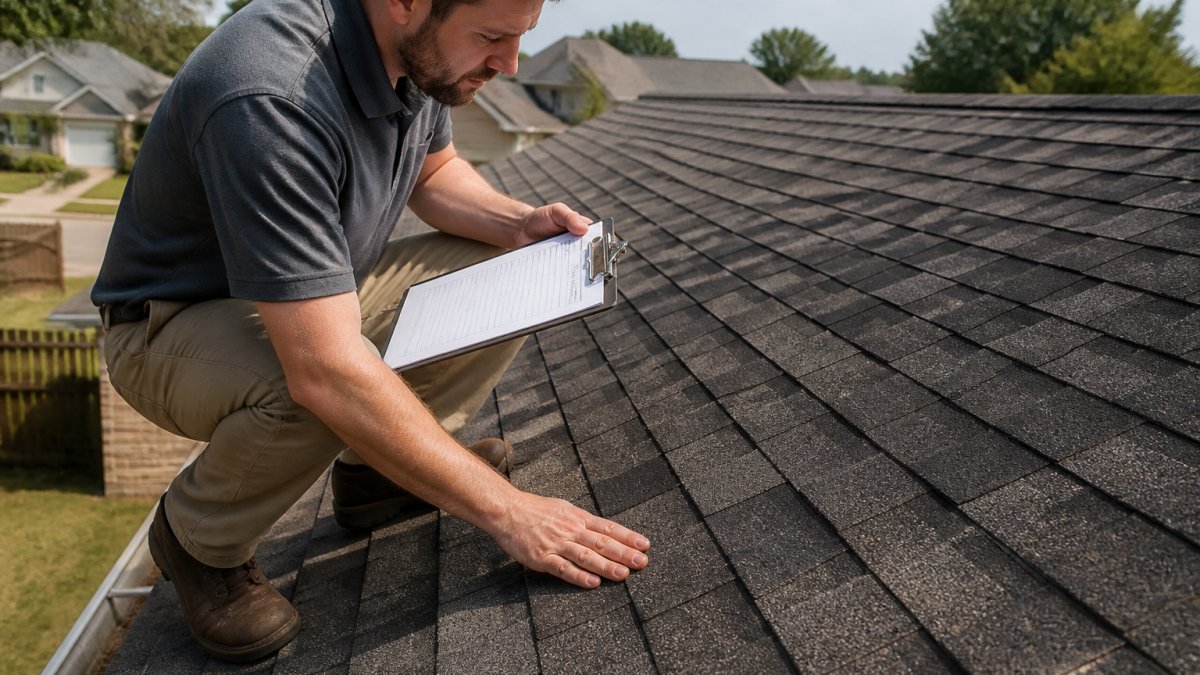
- Map the damage. Count the number of impact marks per 100 square feet on each slope. A common pattern is that insurers treat widespread bruising (often more than a handful of hits per square) as functional damage, while isolated hits on a young roof may be repairable. Document with dated photos and a chalk-marked inspection.
- Compare roof age to expected service life. Service life varies by material, so ask your inspector for a realistic estimate for your specific roof. If the roof is past 75% of its expected life, partial repairs often don't pencil out because the remaining shingles are near failure anyway.
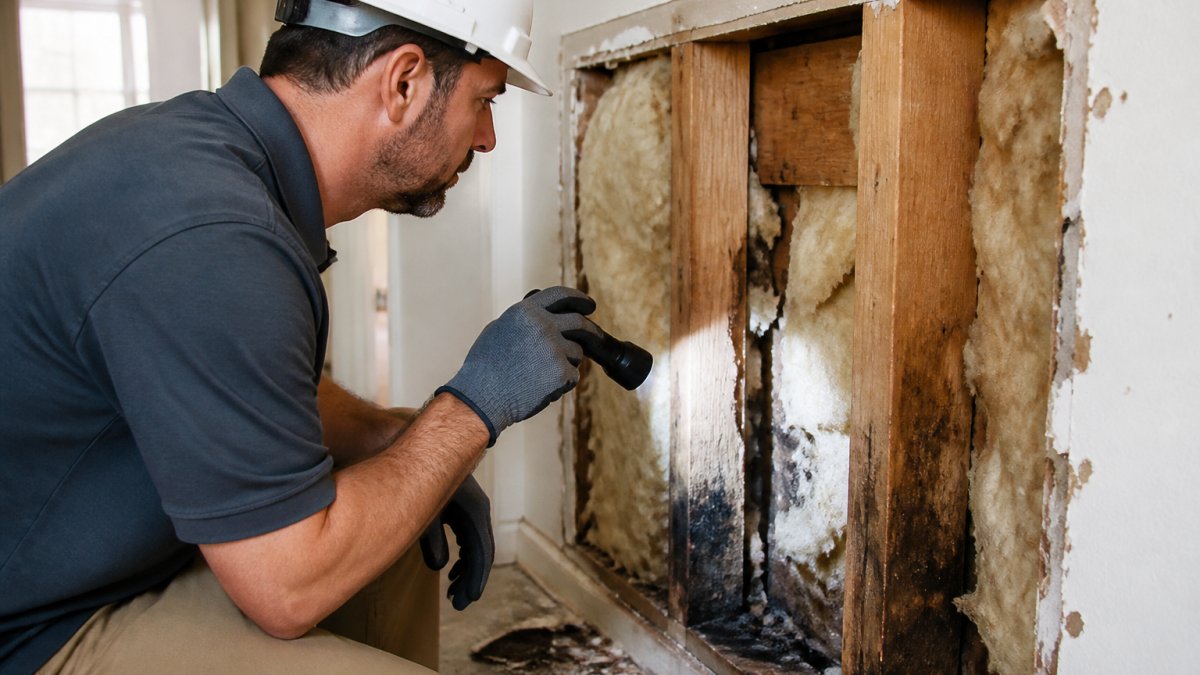
- Check for collateral damage. Look at ridge caps, vents, flashing, gutters, and skylights. Hail often dents soft metals and cracks plastic components, which can signal that the impact was severe enough to compromise the shingle mat beneath.
- Test the substrate. On flat or low-slope roofs, a moisture scan or core sample reveals whether water has reached the deck. If the insulation or decking is saturated, a coating will trap moisture and accelerate rot.
When Restoration Makes Sense
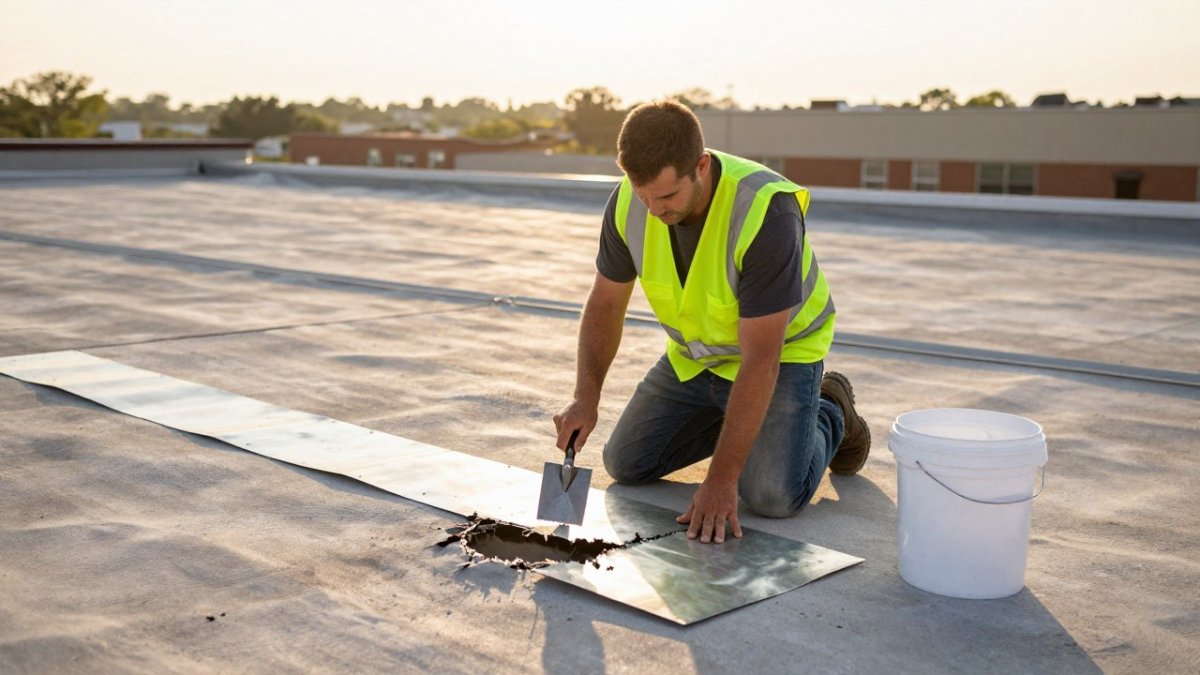
Silicone roof coatings may seal minor surface issues, but they only make sense when the roof is structurally sound and the damage is surface-level. Coatings are not a fix for saturated decking, widespread shingle failure, or active leaks. If your roof is past its prime, a coating just delays the inevitable and can complicate a future claim because the insurer may argue the coating hid pre-existing damage.
When Partial Replacement Makes Sense
Partial replacement, swapping out one damaged slope or section, can be a middle path when damage is confined to a single plane and the rest of the roof is in good condition. The catch is color and material matching: if your shingles are discontinued, a partial replacement may leave a visible mismatch, and some insurers require reasonable matching under policy language or state rules. Ask the adjuster in writing whether matching undamaged slopes is covered before you authorize a partial.
When Full Replacement Is the Right Call
Full replacement wins when damage is widespread across multiple slopes, the roof is near the end of its service life, or the cost of repairs plus future risk approaches the cost of a new roof.
Watch out: A contractor who recommends full replacement before inspecting the attic, flashing, and substrate may be selling rather than diagnosing. Ask for the inspection report and photo evidence before you sign anything.
How to File a Claim for Hail Damage Roof Coverage
Filing starts with documentation, not a phone call to your insurer. Photograph every hit, keep a dated record, and get a professional inspection before you contact the claims line. Most homeowners insurance policies cover hail damage as a covered peril, but the payout depends on your policy structure. Report the claim promptly; many policies carry deadlines for storm claims, so check your policy language rather than relying on memory.
Replacement Cost Value vs. Actual Cash Value
Replacement cost value (RCV) pays to rebuild your roof at today's prices. Actual cash value (ACV) pays replacement cost minus depreciation, leaving you to cover the difference out of pocket. Most claims are paid in two stages: an initial ACV payment, then a recoverable depreciation payment once the work is complete. If your contractor's final invoice exceeds the adjuster's estimate, a supplement request covers the gap. That's where experienced documentation matters.
Hail Resistant Roofing Materials Worth the Upgrade
If you're replacing anyway, upgrading to hail resistant roofing materials can lower future risk. Impact-resistant asphalt shingles are available in higher impact-rating classes, and some insurers may offer premium discounts for them. Metal roofing can perform well against hail, though denting can still occur with larger stones. Architectural shingles offer a middle ground with better durability than basic three-tab. The upgrade usually costs more upfront, but the combination of insurance discounts and longer roof lifespan often justifies it.
Out-of-Pocket Costs, Deductibles, and Supplements
Your out-of-pocket cost starts with your deductible, and hail claims are subject to it just like any other. But the deductible is rarely the whole story. Depreciation gaps under actual cash value (ACV) policies, code-upgrade costs, and excluded work items can add thousands to your final bill. The sections below walk through the mechanics with worked examples so you can estimate your real exposure before you file.
How the Deductible Works on a Hail Claim
Some policies apply a percentage deductible for wind and hail rather than a flat dollar amount (Background on: Hurricane and windstorm deductibles). A percentage-based hail deductible can be substantially larger than a flat deductible, so check your declarations page. Check your declarations page for a separate wind/hail deductible before you assume your regular deductible applies.
RCV vs. ACV: A Worked Example
Suppose your roof replacement is estimated at $18,000 replacement cost value. Under a replacement cost value (RCV) policy, the insurer pays the full $18,000 minus your deductible, subject to policy limits. Under an actual cash value (ACV) policy, the insurer first subtracts depreciation based on the roof's age. If your 20-year shingles are 15 years old, the insurer might apply 75% depreciation, leaving an initial ACV payment of roughly $4,500 (25% of $18,000) minus your deductible.
Recoverable Depreciation and the Two-Stage Payment
Most RCV claims are paid in two stages: an initial ACV payment, then a recoverable depreciation payment once the work is complete and you submit the final invoice. The second payment is not automatic, you must request it, and the insurer may hold back depreciation until it confirms the work was done. Keep every receipt, contract, and photo of the completed roof. If you never request the release of depreciation, the insurer keeps it.
Supplements: When the Adjuster's Estimate Falls Short
A supplement is an additional payment requested when the scope of work exceeds the original adjuster's estimate. Common supplement triggers include discovered decking damage, code-required upgrades such as ice-and-water shield or drip edge, and material price changes between the estimate date and the install date. Supplements are a normal part of the process, not a confrontation, but they require documentation.
Code Upgrades and Matching: What Your Policy May Not Cover
Building codes change, and a like-for-like replacement may not meet current code. Many policies include limited coverage for code-required upgrades, often subject to a cap set by the policy. Matching undamaged shingles to new ones is another gray area: some states require insurers to pay for reasonable matching, while others do not. Ask the adjuster in writing whether code upgrades and matching are covered before you authorize work.
A Realistic Out-of-Pocket Range
Out-of-pocket costs depend on your policy structure, including your deductible, how depreciation is handled, and whether code upgrades or excluded items apply. Review your policy terms to estimate your own exposure.
Watch out: A contractor who offers to waive or absorb your deductible may be violating insurance rules. Review any such offer carefully before signing.
Schedule a Free Hail Damage Roof Inspection
The single most valuable step after a hailstorm is a professional inspection before you commit to any option. At A-Group Capital Roofing, we offer free estimates, damage documentation, and help understanding the insurance restoration process.
Hail season doesn't wait, and neither should your roof. Get a clear, documented assessment of your damage and a straight answer on repair versus replacement. Get started with A-Group Capital Roofing and protect your home with workmanship you can trust.
Frequently Asked Questions
Should I replace my roof after hail damage?
Not always. A single bruised shingle or minor granule loss can often be repaired, while widespread functional damage across slopes usually points to full replacement. The deciding factors are roof age, damage spread, and whether the shingles are still under warranty. Get a written inspection that separates cosmetic marks from functional damage before you commit to a replacement, and ask the inspector to document every hit they find.
How do I know if my hail damage roof qualifies for an insurance claim?
Your policy typically covers hail damage, but the claim hinges on proving functional damage, not just missing granules. Document hail size, photograph dents on gutters, downspouts, and vents, and get a contractor's written assessment before filing. Most policies also carry a separate wind and hail deductible, so compare the repair estimate against that number. If the damage is below your deductible, paying out of pocket usually makes more sense than opening a claim.
What type of roof is most resistant to hail damage?
Impact-resistant asphalt shingles rated Class 3 or Class 4 under UL 2218 hold up best against repeated hail, and some insurers offer premium discounts for them. Stone-coated steel and metal panels also perform well, though denting can occur in larger stones. Composite and architectural shingles sit in the middle. No material is hail-proof, so weigh impact ratings against roof lifespan, warranty terms, and the cost difference before upgrading.
What should I avoid saying to an insurance adjuster about my roof?
Avoid guessing at the cause, offering a damage estimate, or saying the roof is old and probably needs replacing anyway. Stick to facts: when the storm hit, what you observed, and where. Let your contractor's written inspection carry the technical claims. If the adjuster's scope comes back short, you can request a supplement with additional documentation rather than arguing on the spot.