 How-to
How to Handle Roof Repair for Fallen Tree Damage
Last Updated: November 14, 2026
Quick Summary
Roof repair for fallen tree damage starts with getting everyone safe and keeping them off the structure, since a live power line tangled in the branches is usually the biggest danger. Stay at least 30 feet back from any downed wire, then document the damage from the ground and tarp the roof to keep rain out before permanent repairs.
- Assume every downed wire is live and keep at least 30 feet back.
- Never tarp over a live power line or a tree still resting on the roof.
- Photograph the tree, roof, and interior damage from the ground with date and time.
- Hire a licensed tree service for anything large, lodged, or near the house.
- Ask for a written, line-item estimate separating tree removal, tarping, and roof work.
Table of Contents
- Step 1: Get Safe and Keep Everyone Off the Roof
- Step 2: Assess Roof Damage From the Ground
- Step 3: Temporary Roof Tarp After a Tree Falls
- Step 4: Document the Damage for Your Homeowners Insurance Roof Damage From Fallen Tree Claim
- Step 5: Remove Debris and Arrange Professional Tree Removal
- Roof Repair for Fallen Tree Damage Cost: What Drives the Number
- Metal Roof Repair for Fallen Tree Damage: What Changes
- When to Call a Professional vs. What You Can Safely Do Yourself
- Frequently Asked Questions
Step 1: Get Safe and Keep Everyone Off the Roof
A fallen tree on your roof is a safety emergency before it is a repair job. Roof repair for fallen tree damage starts with getting everyone safe and keeping them away from the structure.
The tree is rarely the biggest danger. The live power line tangled in the branches usually is.
Check for Downed Power Lines Before You Step Outside
Look out your window first. Scan for wires on the ground, sagging lines, or lines touching the tree or your roof.
If you see any of these, stop. Call 911 and your utility company. Stay inside until they clear the scene.
Per the Electrical Safety Foundation guidance on downed lines, assume every downed wire is live. Keep at least 30 feet back.
Evacuate Damaged Rooms and Do Not Move a Lodged Tree
Get everyone out of rooms under the damaged section, bedrooms, living rooms, any space where the ceiling sags or shows cracks.
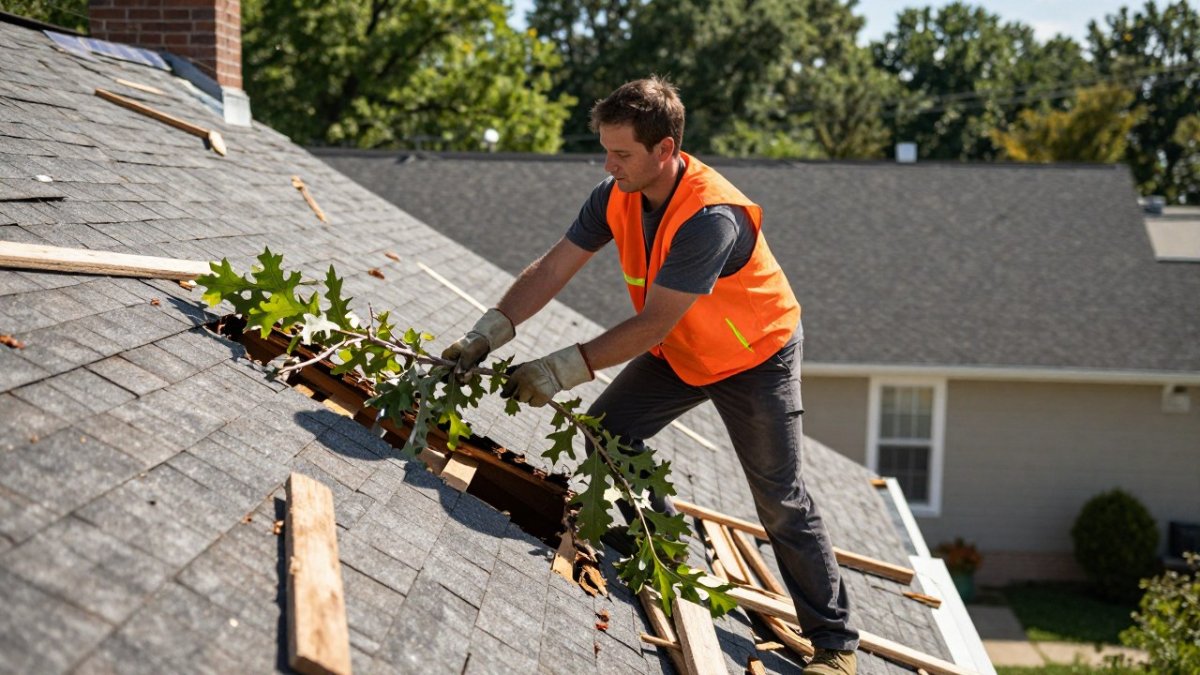
Then leave the tree alone. A lodged limb is under tension. Pulling it can send it through the roof or swing it into you.
- Move people and pets to a safe part of the house or a neighbor's home
- Grab medications, phones, chargers, and important papers if safe
- Do not enter rooms with sagging ceilings or water pouring through light fixtures
Watch out: Walking on a wet roof to "check things out" is how minor damage becomes a hospital visit.
Step 2: Assess Roof Damage From the Ground
You can learn a lot about roof damage without climbing anything. Stand back in your yard and use binoculars or your phone's zoom.
What to Look For by Roof Component
Roof decking and sheathing. Look for sagging lines along the roof plane.
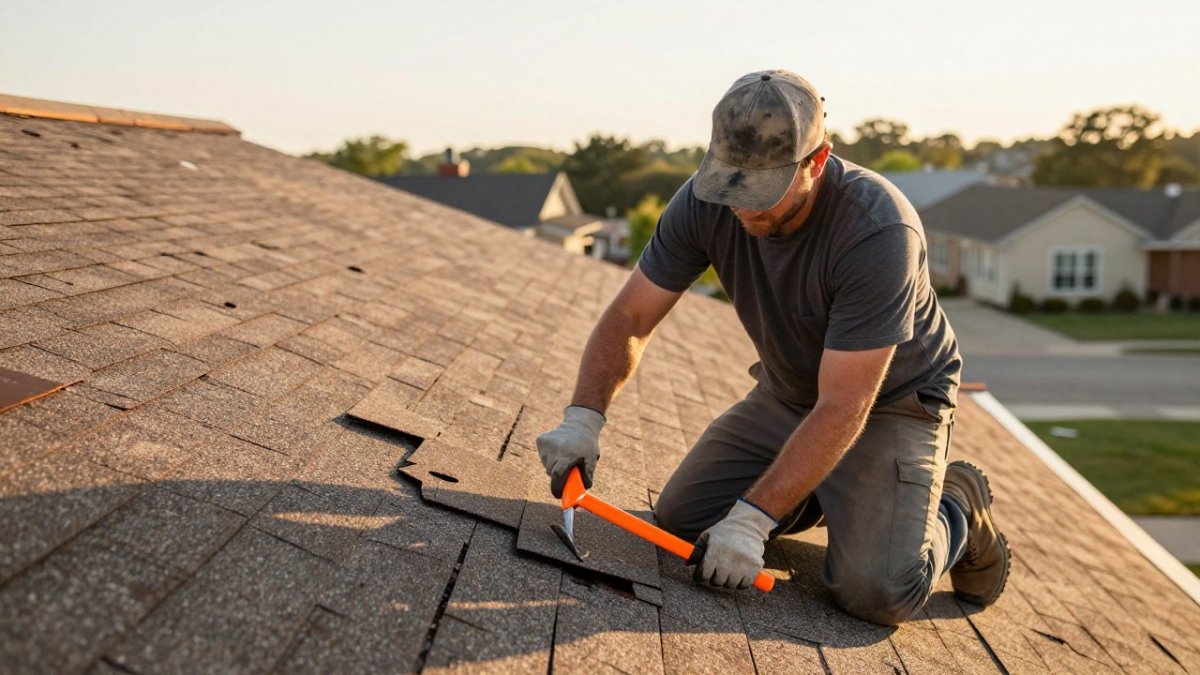
Shingles. Check for missing, cracked, or lifted shingles near the impact point.
Flashing. Look at the metal around chimneys, vents, and valleys.
Siding and soffit. Check for cracks or holes where limbs scraped the edge.
Take photos from the ground at several angles. Note the date and time.
Step 3: Temporary Roof Tarp After a Tree Falls
A temporary roof tarp after a tree falls is the single best move to limit water intrusion before permanent repairs.
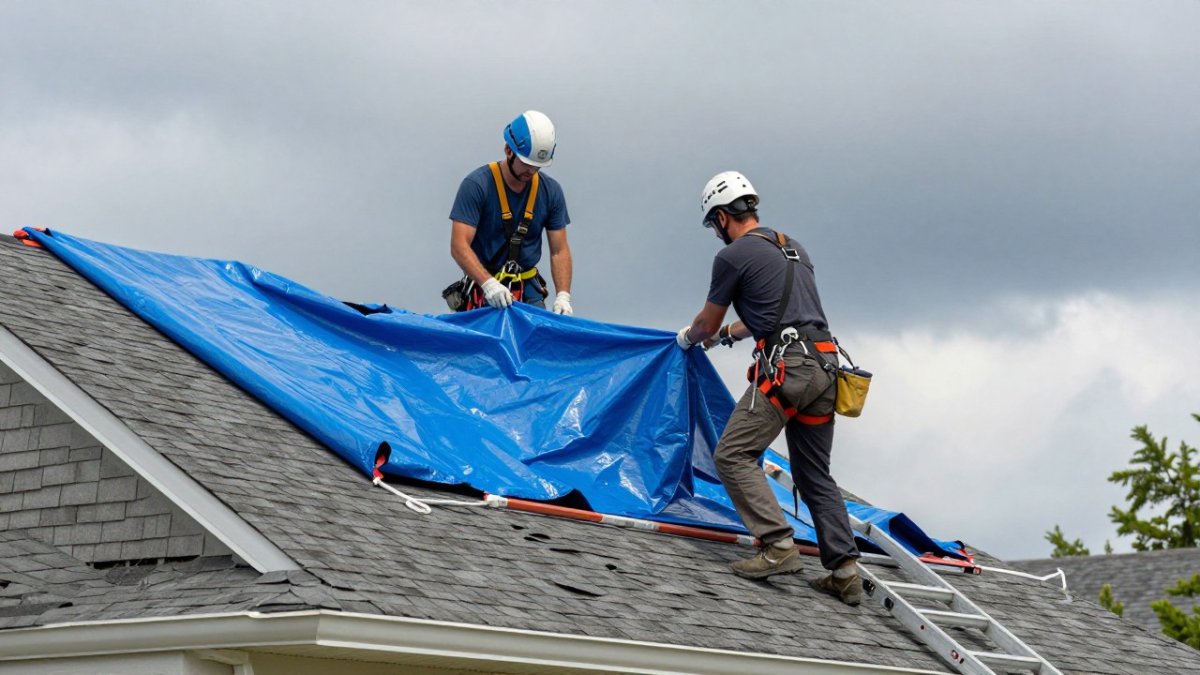
You can tarp a small, reachable area yourself if the roof is dry, low, and stable.
Watch out: Never tarp over a live power line or a tree still resting on the roof. Get the tree cleared first, then tarp.
Step 4: Document the Damage for Your Homeowners Insurance Roof Damage From Fallen Tree Claim
Your homeowners insurance roof damage from fallen tree claim lives or dies on documentation.
Here's the checklist we walk homeowners through:
- Photos of the tree and roof from multiple angles, taken from the ground
- Close-ups of damaged shingles, flashing, gutters, and siding
- Interior photos of water stains, cracks, and sagging ceilings
If you're unsure whether you can file without visible leaks, our guide on filing a roof damage claim without visible leaks walks through what insurers look for.
Report the claim promptly. Most policies require prompt notice, and delays can complicate the process. Keep every damaged item until the adjuster has seen it.
Step 5: Remove Debris and Arrange Professional Tree Removal
Debris removal and tree removal come next, and this is where DIY gets risky. A tree resting on a roof stores energy.
Hire a licensed tree service for anything large, lodged, or near the house. Ask them to remove the tree in sections and avoid dragging limbs across the roof.
Then bring in a qualified roofer for a roof inspection.
Roof Repair for Fallen Tree Damage Cost: What Drives the Number
Roof repair for fallen tree damage cost is not a single flat rate, and any roofer who quotes one over the phone before seeing the roof is guessing. Break the number into the line items that actually appear on an estimate.
The Line Items That Make Up an Estimate
A typical repair estimate separates into these buckets:
- Emergency tarping and water mitigation. Billed by the square (100 square feet) plus labor and materials. Usually the smallest line but the one that prevents the largest secondary damage.
- Tree removal. A separate trade and invoice. Pricing scales with tree size, how lodged or entangled it is, proximity to the house and power lines, and whether a crane is needed. A tree resting on a roof costs more to remove than one that fell clear because every cut must be controlled.
- Roof surface repair. Shingles are priced per square plus underlayment, with a separate charge for matching discontinued shingles. Metal panel repair is priced per panel or per linear foot of seam and fastener work, and matching older profiles can push the number up.
What Pushes the Number Up or Down
The same size hole can produce very different estimates depending on these factors:
- Severity and spread. A single crushed area costs less than damage that runs across a valley or along a ridge.
- Whether the decking is compromised. Shingle-only damage is the cheapest repair. Once the sheathing is crushed, the number climbs because the roof has to be opened up.
- Roof material. Asphalt shingles are the least expensive to repair. Metal, tile, and specialty roofs cost more per square and are harder to match.
How to Read an Estimate
Ask for a written, line-item estimate separating tree removal, temporary protection, roof surface repair, decking, structural work, and interior repairs. Ask what is excluded, whether permits are included, and whether the estimate assumes sound decking or prices replacement separately.
Pricing depends on the scope of your specific repair. For a quote on your project, contact A-Group Capital Roofing directly.
The estimate breaks into distinct line items, and each one moves the total for its own reasons.
| Line item | What drives the cost |
|---|---|
| Emergency tarping and water mitigation | Billed by the square plus labor and materials |
| Tree removal | Tree size, entanglement, proximity to house and power lines, crane use |
| Roof surface repair | Shingles per square plus underlayment; matching discontinued shingles |
| Decking and sheathing replacement | Priced per sheet plus labor; grows with crushed sheets |
| Structural framing | Most expensive line; carpentry, engineering, interior access |
| Flashing and penetration repair | Small area but labor-intensive; common hidden line item |
| Gutters, fascia, and soffit | Often damaged by the same limb and missed first time |
| Interior water damage | Ceiling drywall, insulation, and paint; separate trade |
Metal Roof Repair for Fallen Tree Damage: What Changes
Metal roof repair for fallen tree damage differs from shingle work.
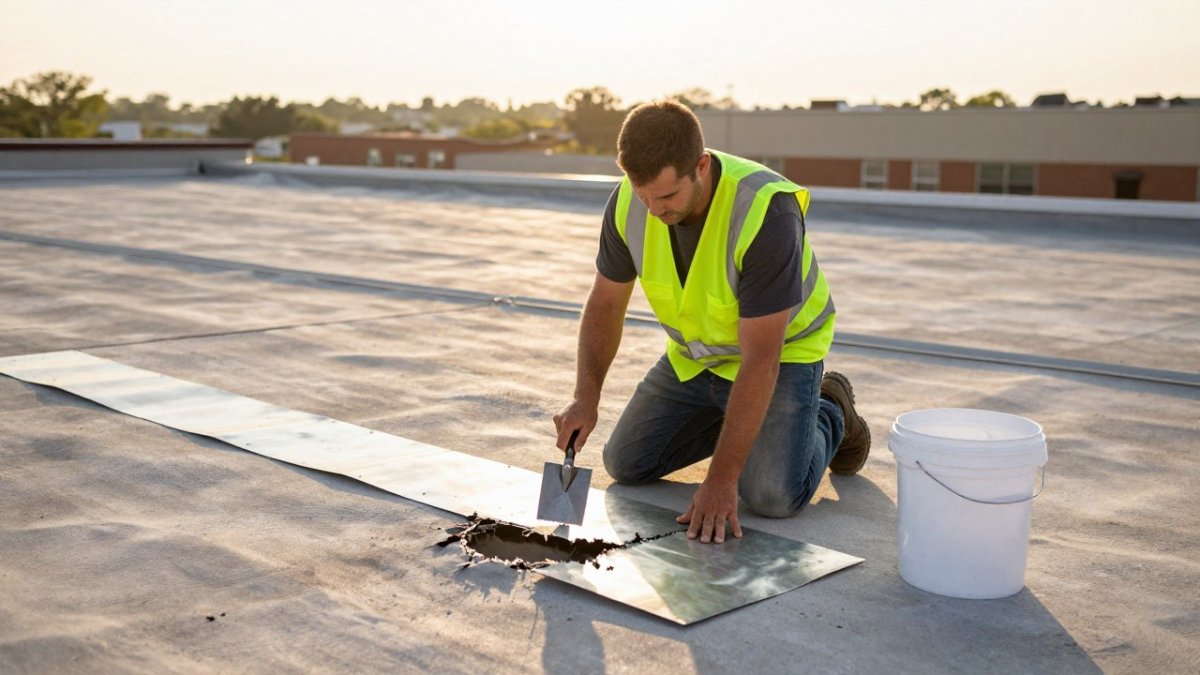
Matching panels can be a challenge on older metal roofs with discontinued profiles or colors, so a partial repair may not blend in.
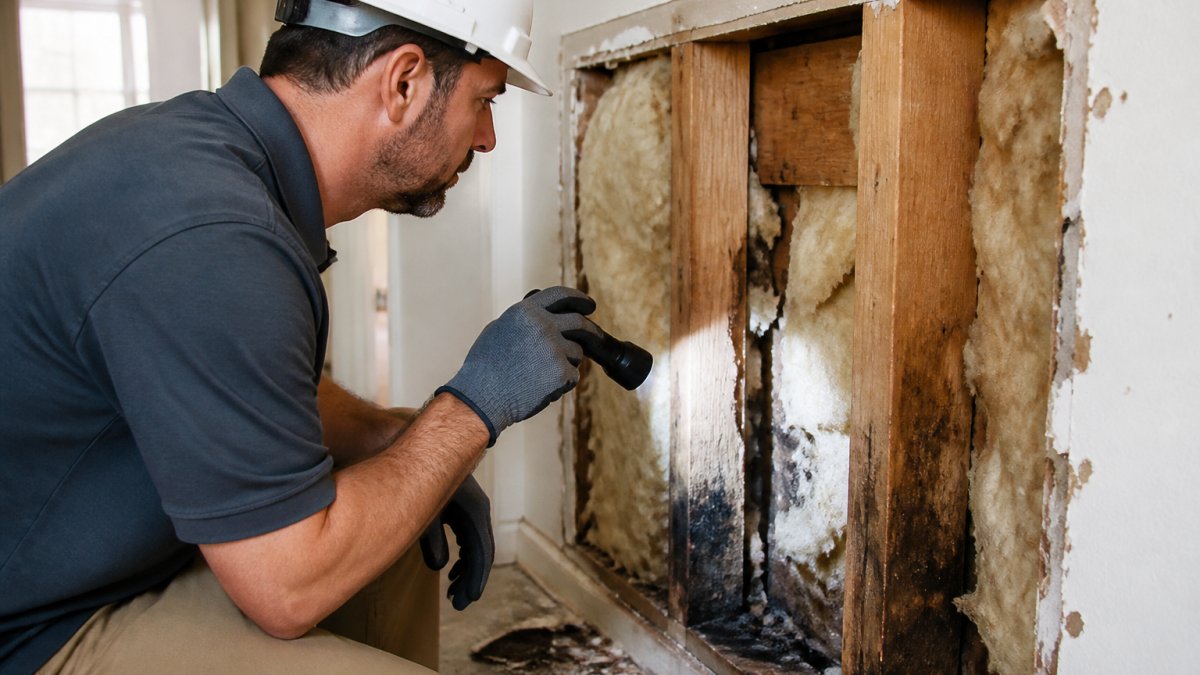
Metal also hides damage well. A panel can look fine while the underlayment and decking beneath it are crushed. That's why a pro inspection matters even more on metal roofs.
When to Call a Professional vs. What You Can Safely Do Yourself
The line between safe homeowner work and a job for a trained crew is not about confidence. It is about height, structure, electricity, and whether a mistake can hurt someone or make the damage worse.
What You Can Safely Do Yourself
These tasks keep your feet on the ground or on a stable ladder and do not require opening the roof:
- Document everything from the ground. Photograph the tree, roof, gutters, siding, and interior damage from multiple angles, noting date and time.
- Move people, pets, and valuables out of damaged rooms. Clear furniture, electronics, and rugs from under sagging ceilings or active drips.
- Catch drips and protect floors. Buckets, towels, and plastic sheeting limit secondary water damage. Do not stand on furniture to reach a ceiling.
- Shut off power at the breaker only if the panel is dry and safely reachable. If water is near the panel or you must stand in water, leave it and call an electrician.
What Requires a Professional
Call a professional for anything on this list. These are not judgment calls:
- Any work at height on a steep, tall, or wet roof. Fall protection, staging, and ladder safety are crew skills, and a fall from a roof is a life-changing event.
- Anything near a downed or sagging power line, or a tree touching a line. Keep at least 30 feet back and let the utility clear it.
- Moving or cutting a lodged tree or large limb. A tree resting on a roof is under tension, and the wrong cut can drop it through the structure or swing it into a person.
- Structural damage. Sagging roof lines, cracked rafters, bowed trusses, or a visibly deflecting ceiling are structural repairs, not roofing repairs.
How to Assess Damage by Component Without Climbing
You can evaluate most of the roof from the ground with binoculars or a phone zoom. Work through the components in order:
- Shingles. Look for missing, cracked, lifted, or granule-starved shingles near the impact. Dark patches often mean granule loss.
- Underlayment. You usually cannot see it, but lifted or missing shingles are a sign it is exposed and taking water.
- Decking and sheathing. Look for dips, sagging lines, or soft spots along the roof plane. A visible dip means the plywood underneath took a hit.
- Rafters and trusses. From the attic if safe and dry, look for cracked, split, or bowed framing and daylight showing through. From outside, look for a sagged ridge line.
Watch out: A roof that looks fine from the ground can hide crushed decking and torn underlayment under intact shingles or metal panels. That is why a professional inspection belongs in every claim, even when the visible damage looks minor.
Frequently Asked Questions
What should I do first if a tree falls on my roof?
Get people and pets out of any room under the impact and stay off the roof yourself. From the ground, look for downed power lines touching the house or the tree, and call 911 if any are present. Once the area is safe, photograph the damage from outside, call your homeowners insurance company to open a claim, and arrange emergency tarping so rain does not reach the roof decking. Do not try to cut or move a tree that is resting on the structure.
Does homeowners insurance cover roof damage from a fallen tree?
In most standard homeowners policies, damage from a tree that falls during a storm is covered, including the cost of removing the tree from the structure, usually up to a set removal limit. Coverage can be denied if the tree was dead and the insurer can show you knew about it and neglected it. Keep every photograph, receipt, and contractor estimate, and ask your adjuster in writing what the removal limit is before debris work begins.
How much does roof repair for fallen tree damage cost?
Roof repair for fallen tree damage cost depends on how large the impact is, which layers were damaged, and whether the tree punched through the decking. A small puncture with a few replaced shingles sits at the low end; a section of sheathing, rafters, and underlayment pushes the number up quickly. Tree removal, tarping, and interior water damage are separate line items. Get a written, itemized estimate before work starts so you can compare it against the adjuster's scope.
Can a metal roof be repaired after a tree falls on it?
Yes, in many cases. Metal roof repair for fallen tree damage can involve replacing affected panels, depending on whether matching panels are available. The bigger question is what happened underneath: a metal roof can look almost undamaged while the decking below is cracked. Have a roofer check the substrate and fasteners, not just the panel surface, before you accept a cosmetic fix.